
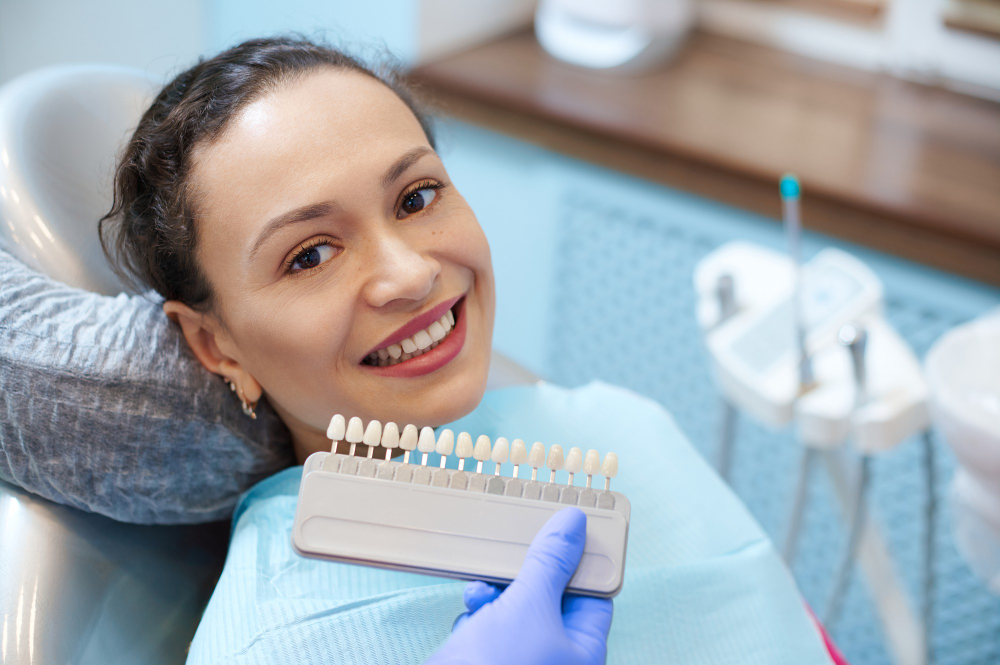
Cosmetic dentistry can help you achieve the smile you have always wanted. Many people choose veneers and crowns to fix chipped, stained, or uneven teeth. These treatments can make your teeth look natural and bright. In this blog, you will learn how cosmetic dentistry, especially veneers and crowns, can transform your smile. We will also cover the benefits, procedures, and tips for maintaining your new look.
What is Cosmetic Dentistry?
Cosmetic dentistry focuses on improving the appearance of your teeth and smile. While general dentistry keeps your mouth healthy, cosmetic treatments make your teeth look better. For example, dentists use cosmetic procedures to fix gaps, stains, or uneven teeth. Many people choose cosmetic dentistry for a smile makeover or to boost their confidence. According to the American Dental Association (ADA), these treatments are safe when done by a trained dentist.
Understanding Veneers: Benefits, Procedure, and Suitability
Veneers are thin shells made of porcelain or resin. Dentists place them on the front of your teeth. They cover stains, chips, or gaps. As a result, your teeth look smooth and even. Veneers are popular for smile makeovers because they look natural and last for years.
Dental Crowns: Uses, Process, and Advantages
Dental crowns are caps that cover the whole tooth. Dentists use crowns to restore teeth that are broken, worn down, or have large fillings. Crowns can also improve the look of misshapen or discolored teeth. They are made from porcelain, ceramic, or metal.
Comparing Veneers and Crowns: Which is Right for You?
Both veneers and crowns can improve your smile, but they serve different needs. Veneers cover only the front of the tooth, while crowns cover the whole tooth. If your tooth is mostly healthy but looks uneven or stained, veneers may be best. On the other hand, if your tooth is weak or damaged, a crown might be better.
Risks and Considerations
Like any dental treatment, veneers and crowns have some risks. For example, your teeth may feel sensitive after the procedure. Sometimes, veneers or crowns can chip or come loose. However, these problems are rare when you follow your dentist’s advice. It is important to have healthy gums and teeth before starting cosmetic treatments. Always talk to your dentist about your medical history and any concerns.
Aftercare and Maintenance Tips
Proper care helps your veneers and crowns last longer. Here are some tips to keep your new smile bright:
Cost Factors and Insurance Considerations
The cost of veneers and crowns can vary. It depends on the material, the number of teeth treated, and your dentist’s experience. Usually, cosmetic treatments are not covered by dental insurance, as they are considered elective. However, if a crown is needed for medical reasons, insurance may help. Always ask your dentist for a detailed estimate and check with your insurance provider before starting treatment.
Frequently Asked Questions
How long do veneers and crowns last? With good care, veneers can last 10–15 years, and crowns can last even longer.
Do veneers and crowns look natural? Yes, modern materials make them look just like real teeth.
Is the procedure painful? Dentists use local anesthesia, so you should feel little to no pain.
Can I eat normally after getting veneers or crowns? Yes, but avoid very hard or sticky foods to protect your dental work.
In summary, cosmetic dentistry offers many ways to improve your smile. Veneers and crowns are safe, effective, and can boost your confidence. Consult a qualified dentist at VI Clinics Dental & Women Care for personalized advice and treatment.